
Happy Baby+happy parents=happy hours
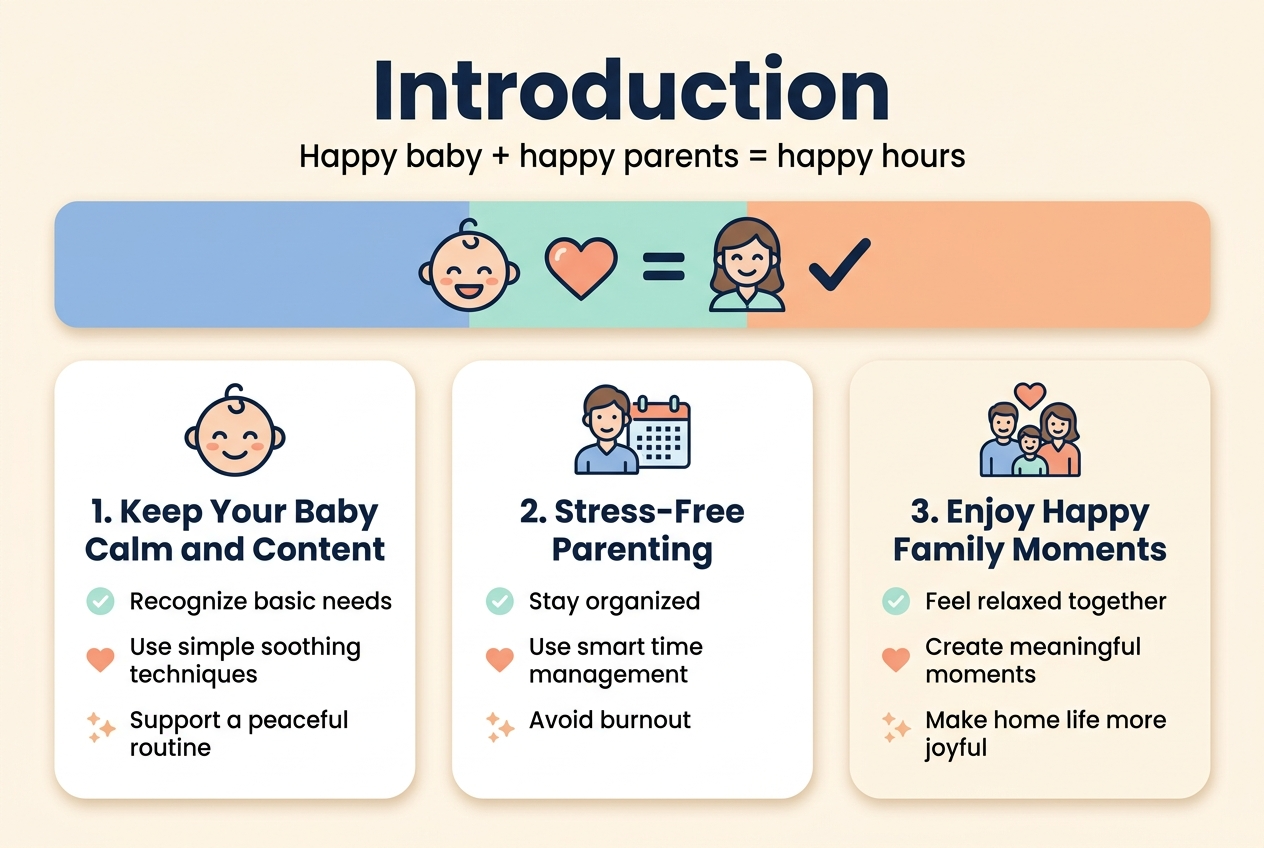
When your baby is content and you feel confident as parents, those precious family moments become truly enjoyable. This guide is for new and experienced parents who want to create more peaceful, joyful hours at home instead of feeling overwhelmed by constant crying or stress.
Happy baby + happy parents = happy hours isn’t just a cute saying—it’s an achievable reality when you understand what works for your family. We’ll explore proven strategies to keep your little one calm and content, from recognizing their basic needs to implementing simple techniques that soothe even the fussiest babies.
You’ll also discover practical stress-free parenting approaches that make daily life smoother for everyone. We’ll cover smart time management solutions that help busy parents stay organized without burning out, plus ways to create meaningful family moments when everyone feels relaxed and happy together.
Understanding Your Baby’s Basic Needs for Contentment
Recognizing Hunger and Feeding Cues
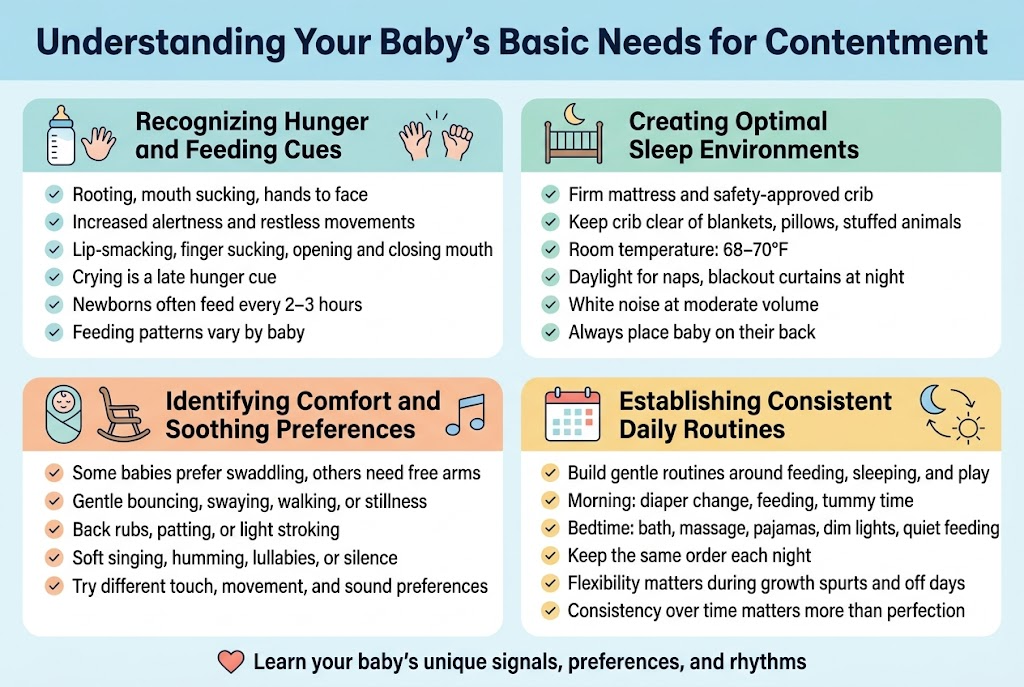
Babies communicate their needs through subtle signals that become clearer once you know what to look for. Early hunger cues include rooting motions where your little one turns their head toward your hand when you touch their cheek, making sucking movements with their mouth, or bringing their hands to their face. Watch for increased alertness and restless movements – these happen before the crying starts.
Don’t wait for crying to begin feeding. Crying is actually a late hunger cue, and a distressed baby often has trouble latching or settling into a feeding rhythm. Instead, respond to those gentle lip-smacking sounds, finger sucking, or the adorable way they open and close their mouth like a little bird.
Every baby develops their own feeding pattern. Some prefer smaller, frequent meals while others take larger amounts with longer gaps between feeds. Newborns typically need feeding every 2-3 hours, but growth spurts can temporarily increase this frequency. Trust your instincts – you’ll quickly learn your baby’s unique signals and timing preferences.
Creating Optimal Sleep Environments
The perfect sleep setup makes an enormous difference in how well your baby rests. Start with a firm mattress in a safety-approved crib, keeping the space clear of blankets, pillows, or stuffed animals. Room temperature should stay between 68-70°F – dress your baby in light sleep clothing and use a sleep sack if extra warmth is needed.
Lighting plays a crucial role in developing healthy sleep patterns. During daytime naps, some natural light is fine and actually helps establish circadian rhythms. For nighttime sleep, create a cave-like atmosphere with blackout curtains and minimal lighting during feedings or diaper changes. This helps your baby distinguish between day and night.
White noise machines or apps can work wonders by masking household sounds that might wake a sleeping baby. The consistent sound mimics the whooshing environment of the womb, providing comfort and security. Keep the volume at a moderate level – around 50 decibels is ideal.
Consider your baby’s sleep position preferences while maintaining safe practices. Always place babies on their backs to sleep, but some prefer having their arms swaddled while others need them free. Pay attention to these preferences and adjust accordingly.
Identifying Comfort and Soothing Preferences
Each baby has unique ways they prefer to be comforted, and discovering these preferences becomes a game-changer for both of you. Some babies love being swaddled tightly, finding security in the snug feeling that reminds them of the womb. Others prefer freedom of movement and become fussy when their arms are restricted.
Movement preferences vary widely too. Gentle bouncing, swaying, or walking around might calm one baby perfectly, while another responds better to being held still in a quiet environment. Rocking chairs work magic for many families, providing that rhythmic motion that babies find irresistible.
Touch preferences are equally individual. Some babies love having their back rubbed in circular motions, while others prefer gentle patting or light stroking of their head or cheek. Pay attention to how your baby responds to different types of touch and pressure.
Sound preferences extend beyond white noise. Some babies calm down when you sing softly, hum, or even just talk in a gentle voice. Others prefer complete silence when they’re overstimulated. Classical music, lullabies, or even recordings of heartbeats can become powerful soothing tools once you identify what works for your little one.
Establishing Consistent Daily Routines
Babies thrive on predictability, even though their needs change as they grow. Start building gentle routines around key activities like feeding, sleeping, and playtime. This doesn’t mean rigid schedules – instead, think of it as creating a loose framework that gives your baby security and helps them know what comes next.
Morning routines might include a diaper change, feeding, and some gentle play or tummy time. Keep activities calm and engaging without overstimulation. Babies process information differently than adults, so simple interactions like making eye contact, talking softly, or showing them high-contrast pictures can be plenty of stimulation.
Bedtime routines become incredibly powerful tools for signaling that sleep time is approaching. This might include a warm bath, gentle massage, putting on pajamas, dimming lights, and having a quiet feeding. The specific activities matter less than doing them in the same order each night.
Flexibility remains key as you establish these patterns. Growth spurts, developmental leaps, and simple off days will disrupt even the best routines. When this happens, gently guide your baby back to the familiar pattern without stress or frustration. Remember that consistency over time matters more than perfection every single day.
When you understand what your baby needs to feel content and use proven strategies to keep them happy, you set the stage for peaceful family life. The combination of meeting your baby’s basic needs, managing stress effectively, and making smart use of your time creates those precious calm moments every parent craves. These approaches don’t just benefit your little one – they give you back your sanity and energy too.
The real magic happens when everyone in the family feels relaxed and content. By focusing on your baby’s happiness while taking care of your own well-being, you create space for genuine connection and joy. Start small with one or two techniques that feel right for your family, and watch how these simple changes can transform your daily routine into something you actually look forward to.

Add comment