
Baby feeding chair
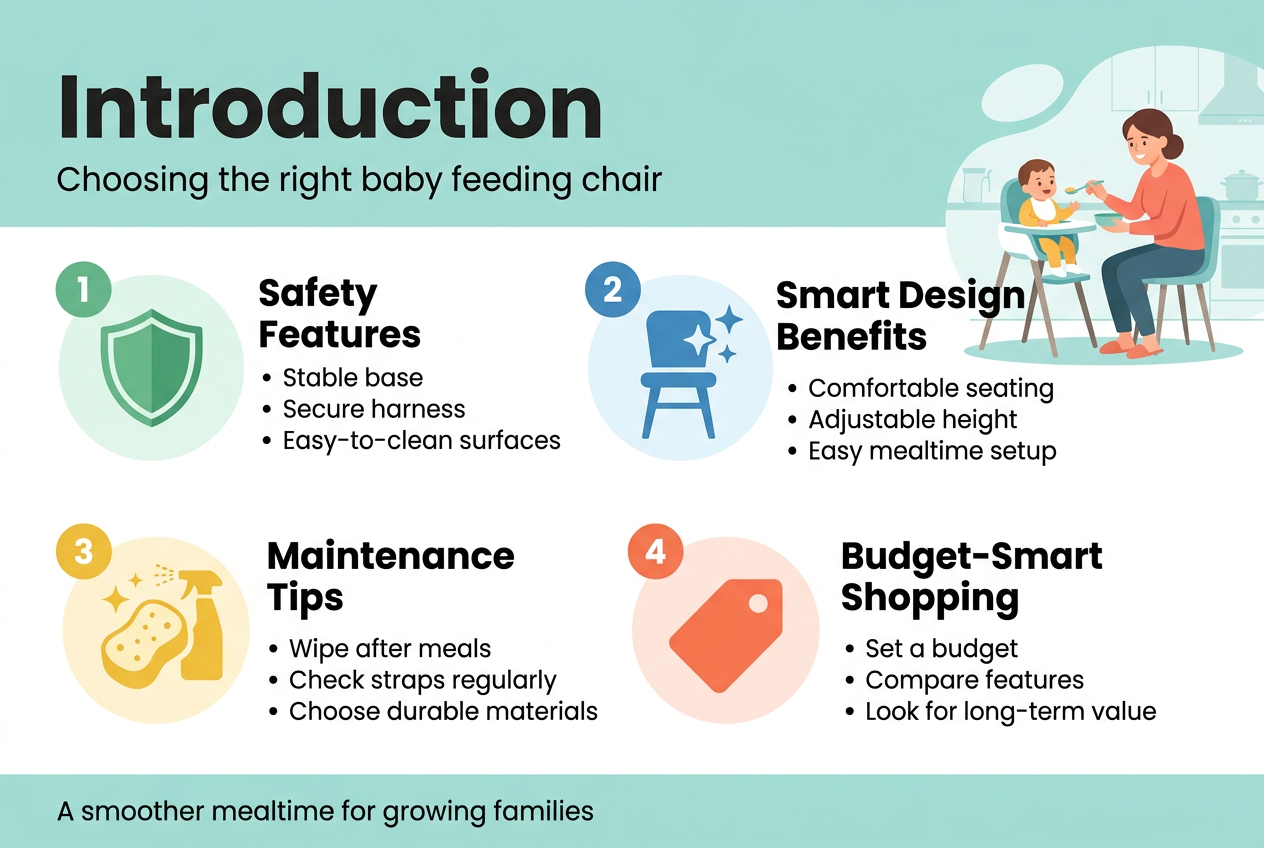
Finding the right baby feeding chair can make mealtime smoother for you and your growing child. This guide helps new parents and caregivers choose the best baby high chair that fits their family’s needs and budget.
We’ll walk through the essential safety features every parent should consider when shopping for a feeding chair for toddlers. You’ll also discover how smart design benefits can transform daily meals from stressful to enjoyable. Finally, we’ll share practical maintenance tips and budget-smart shopping strategies to help you get the most value from your infant feeding chair investment.
Choose the Perfect Baby Feeding Chair for Your Little One
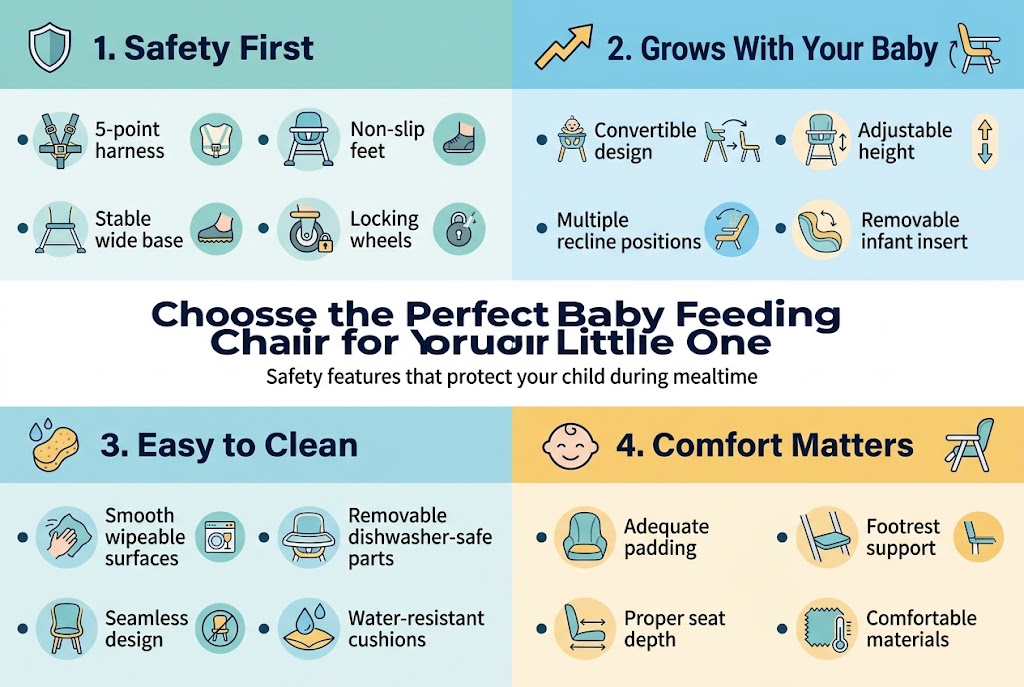
Safety features that protect your child during mealtime
When shopping for a baby feeding chair, safety should be your top priority. Look for five-point harness systems that secure your little one at the shoulders, waist, and between the legs. This prevents sliding or climbing out during meals. The best baby high chair designs include crotch posts that stop babies from slumping forward or slipping under the tray.
Sturdy construction matters just as much as restraint systems. Check for wide, stable bases that won’t tip over when your toddler pushes against the tray or rocks back and forth. Quality baby feeding chair safety features include non-slip feet and locking mechanisms on wheels if the chair is mobile.
Tray safety deserves special attention. Choose chairs with trays that lock securely in place but release easily for adults. Rounded edges prevent injuries during active mealtimes, while raised edges contain spills and prevent food from falling to the floor.
Age-appropriate designs that grow with your baby
Smart parents invest in feeding chairs for toddlers that adapt as children develop. Convertible designs transform from infant seats with full support to booster chairs for older kids. Many models feature removable infant inserts that provide extra cushioning and smaller seating areas for newborns who aren’t quite ready for full-sized chairs.
Adjustable height settings let you match the chair to your dining table or kitchen counter. This flexibility means your child can join family meals at the proper level, promoting social interaction and better eating habits. Some chairs offer multiple recline positions, perfect for younger babies who need more support during feeding times.
Removable trays add versatility as children grow. Older toddlers can pull up directly to the family table, making mealtime feel more grown-up and encouraging independence.
Easy-to-clean materials that save time and effort
Mealtime messes are inevitable, so choose materials that handle daily cleanups without fuss. Smooth plastic surfaces wipe down quickly with damp cloths, while textured fabrics trap crumbs and liquids. High chair maintenance becomes much simpler when you select chairs with removable, dishwasher-safe components.
Seamless designs without cracks or crevices prevent food buildup and bacterial growth. Avoid chairs with excessive padding or hard-to-reach spaces that collect grime over time. Water-resistant cushions can go straight into the washing machine, saving you scrubbing time.
Consider chairs with minimal assembly requirements and fewer parts. The simpler the design, the fewer places for food to hide and the quicker your post-meal cleanup becomes.
Comfort elements that keep babies happy while eating
Comfortable babies eat better and fuss less during meals. Look for infant feeding chair designs with adequate padding that supports growing bodies without being too soft. Footrests help older babies maintain good posture and feel secure while eating.
Proper seat depth matters for comfort and safety. Seats that are too deep leave little legs dangling uncomfortably, while shallow seats don’t provide enough support. The best chairs offer ergonomic designs that accommodate your baby’s natural sitting position.
Temperature considerations often get overlooked. Metal chairs can feel cold against skin, while certain plastics may retain heat. Test different materials to find what feels most comfortable for your child’s sensitive skin.
Essential Safety Features Every Parent Should Consider
Five-point harness systems for maximum security
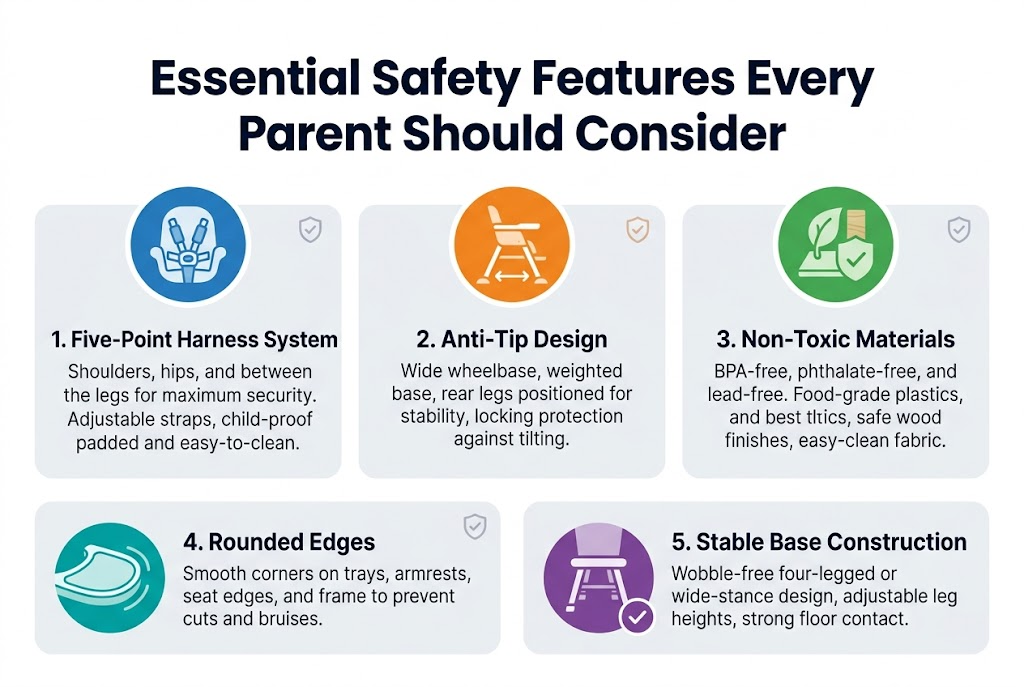
A five-point harness system stands as your baby feeding chair’s most critical safety component. Unlike basic three-point systems, this design secures your little one at five contact points: both shoulders, both hips, and between the legs. This comprehensive restraint system prevents your baby from standing up, sliding down, or climbing out during feeding time.
When evaluating baby feeding chair safety, look for harnesses with adjustable straps that grow with your child. The buckle mechanism should be simple enough for adults to operate quickly but complex enough that toddlers can’t figure out the release. Quality harnesses feature padded straps to prevent discomfort during longer meals and easy-to-clean materials that withstand frequent washing.
Anti-tip design that prevents dangerous accidents
The best baby high chair incorporates anti-tip engineering that keeps the chair grounded even when your active toddler leans or rocks. Look for chairs with a wide wheelbase that extends beyond the seat’s footprint. Some feeding chair for toddlers models feature weighted bases or special leg configurations that automatically counterbalance your child’s movements.
Anti-tip mechanisms work through physics rather than luck. Chairs with rear legs positioned farther back than the backrest create natural stability. Some manufacturers add locking mechanisms that engage when weight shifts beyond safe parameters, immediately preventing dangerous tilting.
Non-toxic materials safe for curious babies who chew
Babies explore their world through their mouths, making material safety paramount in any infant feeding chair. Seek chairs certified as BPA-free, phthalate-free, and lead-free. These certifications ensure that even if your baby gnaws on tray edges or armrests, they won’t ingest harmful chemicals.
Food-grade plastics and natural wood finishes offer the safest options. Avoid chairs with painted surfaces unless the manufacturer specifically states the paint meets food-safety standards. Many parents overlook fabric choices, but look for materials that resist bacteria growth and clean easily without requiring harsh chemicals.
Rounded edges that eliminate sharp corner injuries
Sharp corners and edges pose serious risks during your baby’s natural wiggling and reaching. Quality baby feeding chair designs feature carefully rounded edges on all surfaces your child might contact. This includes tray corners, armrests, seat edges, and even the chair’s structural frame.
Check every surface manually during your selection process. Run your hands along all edges where your baby might bump their head or scrape their arms. The smoothest finishes prevent both cuts and bruises while making cleaning easier for busy parents.
Stable base construction for wobble-free feeding
A wobble-free base creates the foundation for safe feeding sessions. Test any chair by pressing firmly on different points while it’s empty – quality construction shouldn’t flex or shift. Four-legged designs typically offer more stability than three-legged alternatives, especially on uneven floors.
Wide-stance construction distributes weight more effectively than narrow bases. Some chairs feature adjustable leg heights to accommodate slight floor variations, ensuring stable contact on all surfaces. Remember that stability becomes even more important as your child grows larger and more active during mealtimes.
Transform Mealtime with Smart Design Benefits
Adjustable Height Settings That Match Your Dining Table
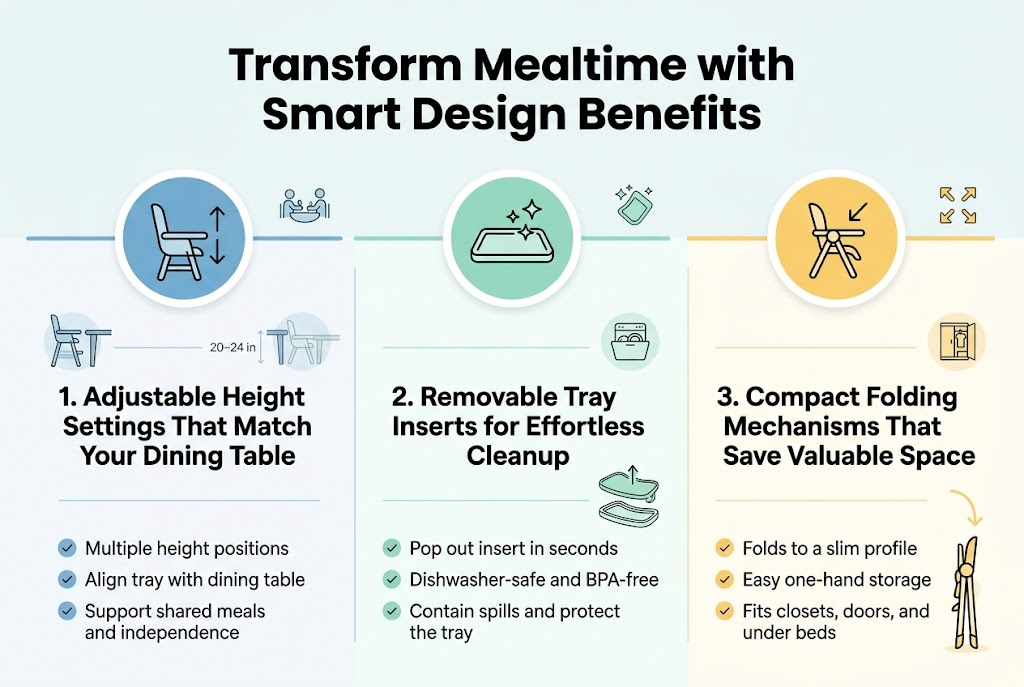
The beauty of a well-designed baby feeding chair lies in its ability to grow with your family’s needs. Adjustable height settings transform your high chair from a standalone feeding station into a seamless part of your dining experience. Most quality baby feeding chairs offer multiple height positions, typically ranging from 20 to 24 inches, allowing you to perfectly align the tray with your dining table surface.
This flexibility means your little one can join family meals without feeling isolated in a corner. When the chair sits at the right height, your toddler experiences the social benefits of shared mealtimes while you maintain easy access for feeding assistance. The adjustment mechanism varies between models – some feature simple pin-lock systems, while premium options offer one-handed pneumatic adjustments that parents love during busy meal prep.
Height versatility also supports your child’s developmental stages. Younger babies benefit from lower positions for easier parent access, while confident self-feeders thrive at table height where they can practice independence alongside siblings.
Removable Tray Inserts for Effortless Cleanup
Mealtime messes are inevitable, but smart tray design makes cleanup surprisingly manageable. The best baby high chairs feature removable tray inserts that pop out with minimal effort, allowing you to rinse them directly in the sink or load them into the dishwasher.
These inserts typically nest inside the main tray, creating raised edges that contain spills and dropped food. When mealtime ends, simply lift out the insert while leaving the base tray attached to the chair. This two-piece system protects the main tray from permanent stains and reduces wear over time.
Look for inserts with smooth, non-porous surfaces that resist bacterial buildup. BPA-free materials ensure safety while dishwasher compatibility saves precious time during your daily routine. Some premium feeding chairs include multiple insert options – deeper bowls for saucy meals and flatter surfaces for finger foods.
The convenience factor extends beyond just cleaning. Removable inserts allow you to prep meals in advance, loading the insert with snacks or portions before snapping it into place when your hungry toddler arrives.
Compact Folding Mechanisms That Save Valuable Space
Space constraints challenge many families, making foldable baby feeding chairs absolute lifesavers. Modern folding mechanisms transform bulky high chairs into slim profiles that slide into closets, behind doors, or under beds when not in use.
The engineering behind quality folding systems focuses on both compactness and stability. Look for chairs that fold to less than 8 inches wide while maintaining structural integrity during use. Single-hand folding mechanisms prove invaluable when you’re juggling a squirmy baby and need quick storage solutions.
Folding features benefit different family situations uniquely. Apartment dwellers maximize limited kitchen space, while families with multiple young children can store extra chairs between growth spurts. Travel-friendly options make visits to grandparents stress-free, ensuring consistent feeding routines away from home.
Storage isn’t the only advantage. Folding capabilities make deep cleaning easier since you can collapse the chair to access every crevice and joint where food particles hide. This thorough maintenance extends your infant feeding chair’s lifespan while maintaining hygiene standards that protect your growing child.
Quality folding mechanisms use durable hinges and locking systems that withstand repeated use without loosening or breaking, ensuring your investment provides reliable service throughout your child’s feeding journey.
Maintenance Tips That Keep Your Chair Like New
Daily cleaning routines that prevent bacteria buildup
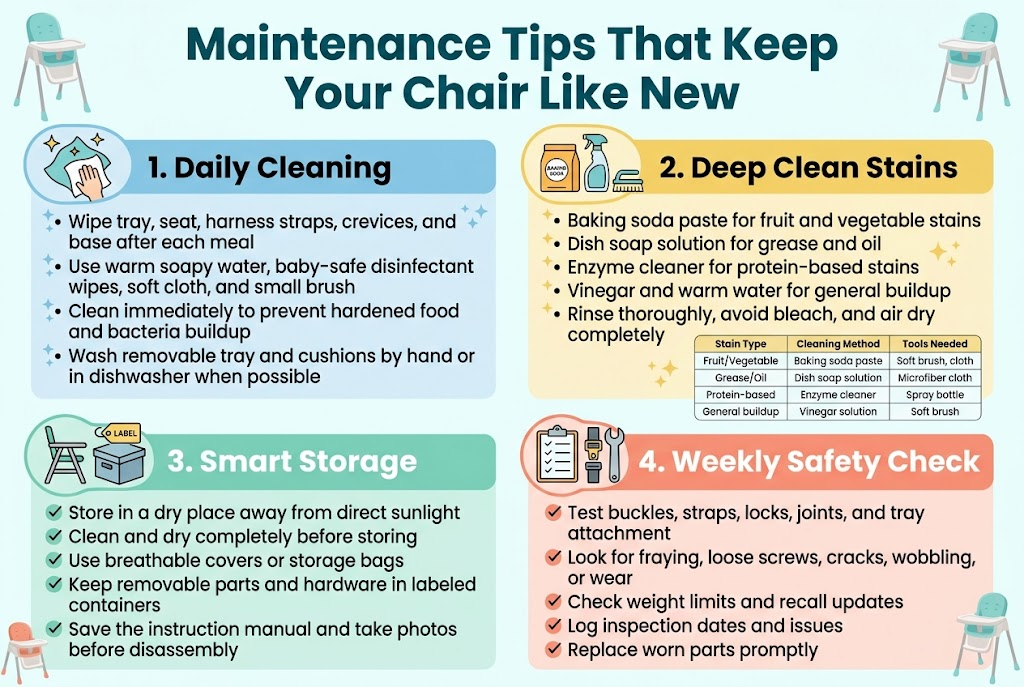
Keeping your baby feeding chair clean every day makes a world of difference in preventing harmful bacteria from making themselves at home. After each feeding session, wipe down all surfaces with warm soapy water, paying special attention to crevices where food loves to hide. The tray, seat, and harness straps need daily attention since these areas come into direct contact with your little one.
Create a simple cleaning kit that stays nearby – baby-safe disinfectant wipes, a soft cloth, and a small brush for getting into tight spots. Many parents find that cleaning immediately after meals prevents food from hardening and becoming a breeding ground for germs. Don’t forget to check under the seat and around the base where crumbs often fall.
For high chair models with removable parts, take advantage of this feature. Pop the tray and cushions into the dishwasher when possible, or hand wash them thoroughly. This daily habit takes just a few minutes but protects your child’s health and extends your chair’s lifespan significantly.
Deep cleaning methods for stubborn food stains
Sometimes daily cleaning isn’t enough, especially when dealing with colorful baby foods that seem determined to leave their mark. For tough stains on your baby feeding chair, create a paste using baking soda and water. Let it sit on the stain for 10-15 minutes before scrubbing gently with a soft brush.
White vinegar mixed with warm water works wonders on mineral deposits and sticky residue. Spray the solution onto affected areas and let it work its magic before wiping clean. For fabric components, check if they’re machine washable – many modern feeding chairs feature removable, washable seat covers that make deep cleaning much easier.
| Stain Type | Cleaning Method | Tools Needed |
|---|---|---|
| Fruit/Vegetable | Baking soda paste | Soft brush, cloth |
| Grease/Oil | Dish soap solution | Microfiber cloth |
| Protein-based | Enzyme cleaner | Spray bottle |
| General buildup | Vinegar solution | Soft brush |
Avoid harsh chemicals or bleach-based products that could damage the chair’s finish or pose safety risks to your child. Always rinse thoroughly after deep cleaning and allow everything to air dry completely before reassembling.
Storage solutions that protect your investment
Smart storage keeps your infant feeding chair in excellent condition between uses and as your child grows. For portable or foldable models, store them in a dry area away from direct sunlight to prevent fading and material degradation. Clean and dry the chair completely before storing to prevent mold or mildew.
Consider using furniture covers or breathable storage bags for long-term storage. Remove any detachable parts and store them separately in labeled containers so nothing gets lost. Keep the instruction manual with the chair – you’ll thank yourself later when it’s time to reassemble or adjust settings.
If your feeding chair for toddlers converts to different configurations, take photos before disassembling to make setup easier. Store hardware in small zip-top bags taped to the chair or kept in a dedicated container with clear labels.
Regular safety inspections to ensure ongoing protection
Your baby’s safety depends on regular checks of your baby feeding chair safety features. Weekly inspections should include testing all buckles, straps, and locking mechanisms. Look for signs of wear like fraying straps, loose screws, or cracks in plastic components.
Check weight limits regularly as your child grows – exceeding manufacturer recommendations compromises safety. Examine the stability of folding mechanisms and ensure all joints move smoothly without sticking or wobbling. Pay attention to the tray attachment system, making sure it locks securely in place.
Keep track of any recalls by registering your product with the manufacturer. Many companies send email notifications about safety updates or recall notices. Create a simple maintenance log noting inspection dates and any issues found – this helps identify patterns and ensures consistent safety monitoring.
Replace worn parts promptly rather than trying to repair them yourself. Most manufacturers sell replacement straps, trays, and other components, which is much safer than makeshift fixes that could fail when you least expect it.
Budget-Smart Shopping Strategies for New Parents
Must-have features versus nice-to-have extras
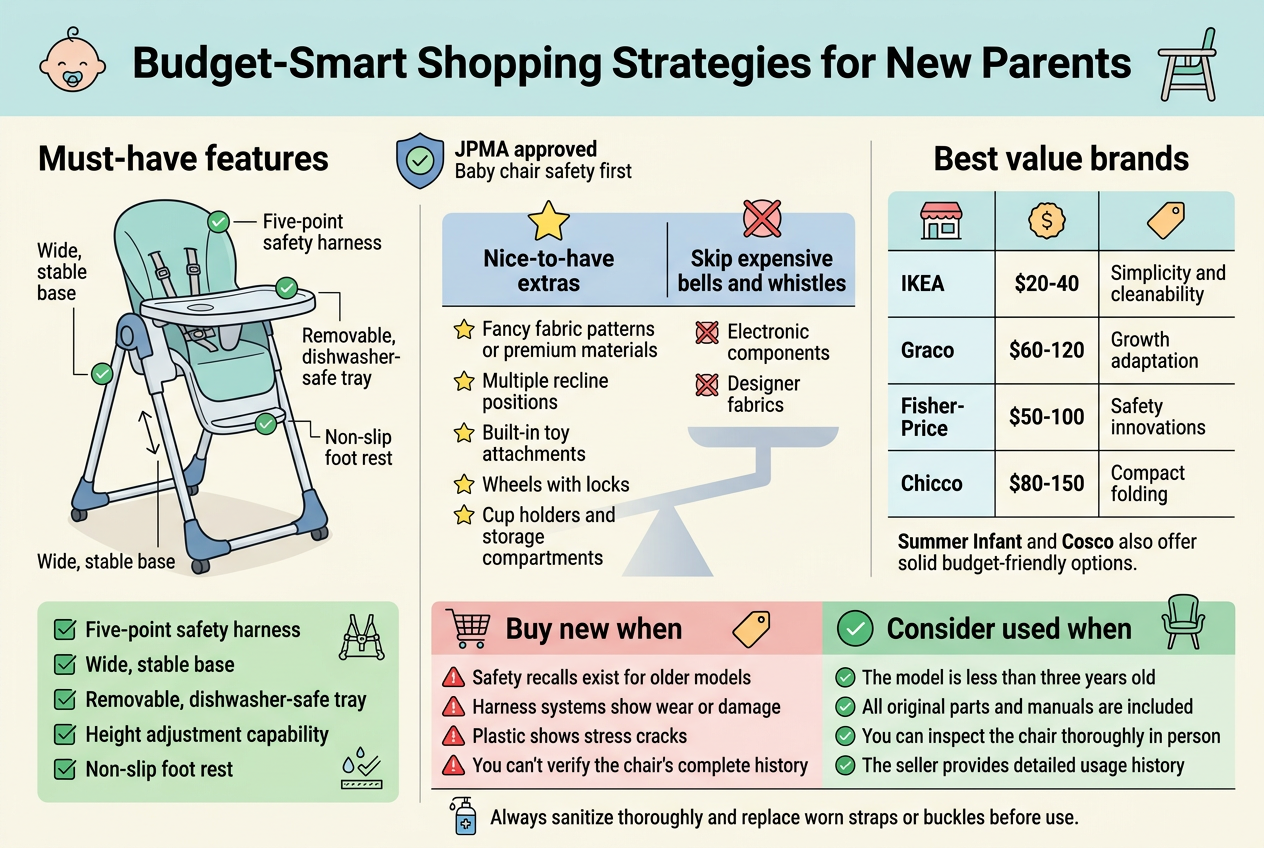
When shopping for an affordable baby feeding chair, focus your budget on safety and functionality first. Essential features include a sturdy five-point harness system, stable base construction, and easy-to-clean surfaces. Look for baby feeding chair safety certifications like JPMA approval, which ensures the product meets strict industry standards.
Your baby chair buying guide priority list should include:
Must-have features:
- Five-point safety harness
- Wide, stable base
- Removable, dishwasher-safe tray
- Height adjustment capability
- Non-slip foot rest
Nice-to-have extras:
- Fancy fabric patterns or premium materials
- Multiple recline positions
- Built-in toy attachments
- Wheels with locks
- Cup holders and storage compartments
The best baby high chair options often balance essential safety features with one or two convenient extras. Skip expensive bells and whistles like electronic components or designer fabrics that add cost without improving functionality.
Quality brands that offer the best value for money
Several manufacturers deliver reliable infant feeding chair options without breaking the bank. IKEA’s Antilop offers exceptional value at under $30, featuring easy assembly and dishwasher-safe parts. Graco’s Table2Table grows with your child and provides excellent durability for mid-range budgets.
Top value brands include:
| Brand | Price Range | Best Feature |
|---|---|---|
| IKEA | $20-40 | Simplicity and cleanability |
| Graco | $60-120 | Growth adaptation |
| Fisher-Price | $50-100 | Safety innovations |
| Chicco | $80-150 | Compact folding |
Summer Infant and Cosco also manufacture solid feeding chair for toddlers options that won’t strain your wallet. These brands focus on meeting safety standards while keeping production costs reasonable.
When to buy new versus gently used options
Buying used baby feeding chairs can save significant money, but safety comes first. Never compromise on recalled models or chairs with missing safety straps. Check the Consumer Product Safety Commission website for current recalls before purchasing any secondhand option.
Buy new when:
- Safety recalls exist for older models
- Harness systems show wear or damage
- Plastic shows stress cracks
- You can’t verify the chair’s complete history
Consider used when:
- The model is less than three years old
- All original parts and manuals are included
- You can inspect the chair thoroughly in person
- The seller provides detailed usage history
Facebook Marketplace, consignment shops, and parent groups often have quality used options. Always sanitize thoroughly and replace any worn straps or buckles before use. Some manufacturers sell replacement parts, making used chairs more viable if minor components need updating.
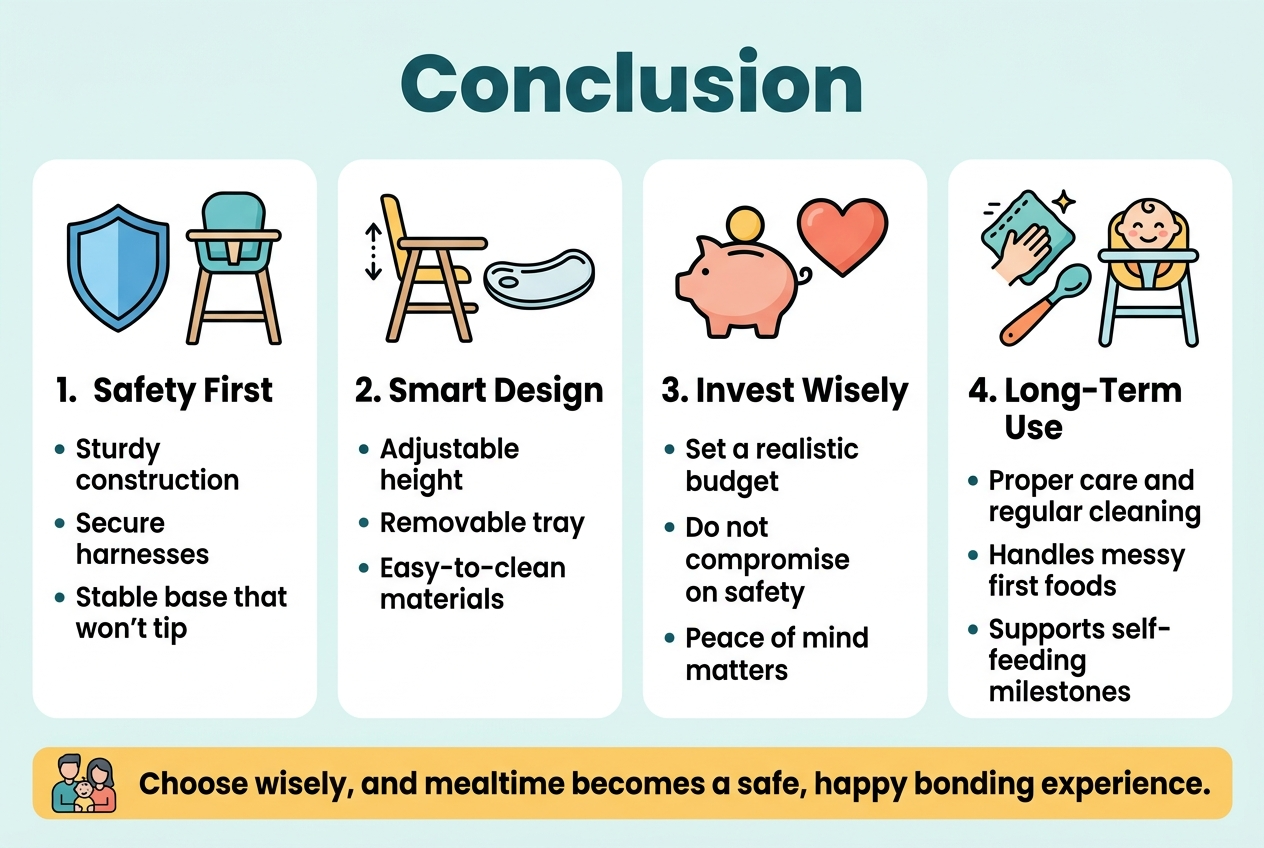
Finding the right baby feeding chair doesn’t have to be overwhelming when you know what to look for. Focus on safety features like sturdy construction, secure harnesses, and stable bases that won’t tip over during those inevitable wiggle sessions. Smart design elements like adjustable heights, removable trays, and easy-to-clean materials will make your daily routine so much smoother and save you precious time during busy meal prep.
Remember that a good feeding chair is an investment in both your baby’s safety and your own sanity. Set a realistic budget, but don’t compromise on essential safety features – your peace of mind is worth it. With proper care and regular cleaning, the right chair will serve your family well through all those messy first foods, finger painting with purees, and eventually those proud moments when your little one masters self-feeding. Take your time choosing wisely, and mealtime will become one of your favorite bonding experiences together.

Add comment